
Table of Contents


Ready to create more pipeline?
Get a demo and discover why thousands of SDR and Sales teams trust LeadIQ to help them build pipeline confidently.



AI sales intelligence tools can help reps streamline prospecting workflows, reclaim time, and focus more on selling.
Using sales intelligence data, sales professionals can identify high-quality leads faster and understand their needs more accurately, which leads to better sales outcomes.
In addition to sales teams, AI sales intelligence tools also help marketing, customer success, GTM, and RevOps teams work better together.
Get a demo and discover why thousands of SDR and Sales teams trust LeadIQ to help them build pipeline confidently.
Sales reps spend 64% of their time on tasks that don’t generate revenue.
Wouldn’t it be easier to hit your numbers if you could take a lot of those hours back?
Using AI-powered sales intelligence tools to automate research, lead nurturing, and other crucial yet repetitive sales tasks, reps can reclaim time and focus more on what they do best: selling.
Keep reading to learn more how sales intelligence works, the benefits of AI-driven sales intelligence tools for different teams, and some of the best sales intelligence tools on the market today.
Sales intelligence is the process of collecting and analyzing buyer data to improve sales strategies and help reps close more deals.
Historically, reps spent tons of time manually researching prospects, tracking leads, and analyzing customer interactions to gather sales intelligence data.
With the rise of artificial intelligence, however, sales intelligence has evolved into a more automated, data-driven process, giving reps actionable insights in real time without requiring much heavy lifting on their end.
It’s basically like a cheat code.
Using AI sales intelligence tools, reps can automatically identify high-value leads, which makes it simple to figure out which accounts to prioritize. This shift from manual research to AI-driven automation eliminates wasted effort, ensuring reps spend the bulk of their weeks engaging prospects and key decision-makers most likely to convert.
By combining data from multiple sources — company websites, LinkedIn, news publications, and customer relationship management (CRM) systems — and using AI to detect patterns and surface buying signals, AI sales intelligence tools help reps strike when the iron is hottest, responding to opportunities when they arise.
With all this said, it comes as no surprise that teams that use AI sales tools are 30% more productive than their old-school counterparts, and that AI sales technology can help increase revenue by as much as 25%, according to MarketsandMarkets.
Due to these benefits, 92% of sales orgs are planning to invest more heavily in AI sales solutions over the next three years.
If you want to keep pace with peers, you should, too.
Sales intelligence data comes in all shapes and sizes:
By transforming data into actionable insights, sales intelligence helps teams improve sales performance. Using firmographic, contact, technographic, event-based, and historical data, sales teams can prioritize leads and engage prospects more authentically, on a more personal level.
Simply put, sales intelligence helps reps remove guesswork from the equation. Instead of spending time researching accounts and figuring out what to do next, AI sales tools become partners focused on helping you maximize each minute. With AI-driven sales intelligence tools at your disposal, you’ll spend more focusing on high-value activities that drive revenue instead of drowning in tasks that don’t.
Here are five key ways sales intelligence tools help sales teams get more done:
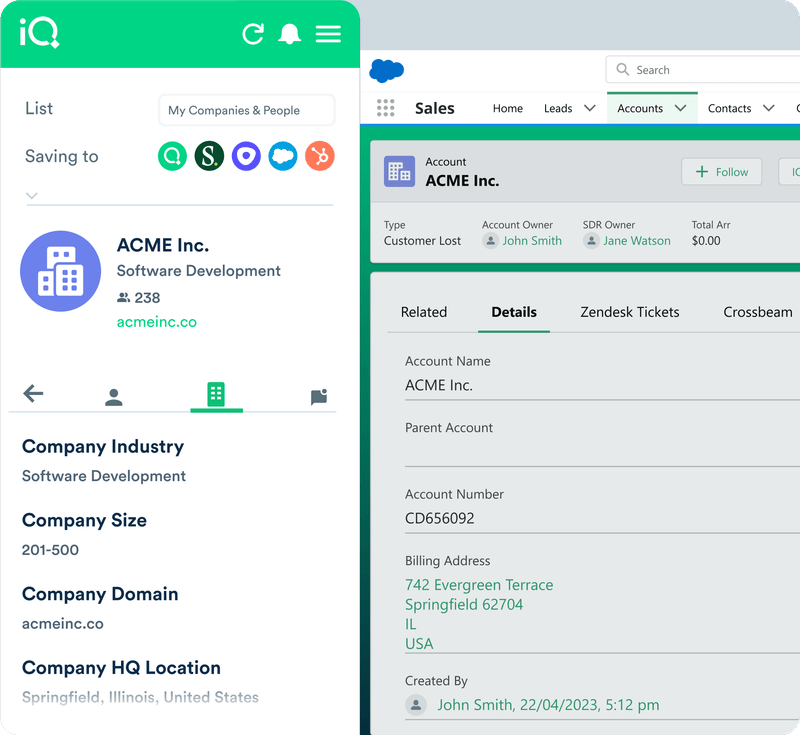
G2 score: 4.2/5 stars (1,133 reviews)
LeadIQ is a powerful sales intelligence platform designed to help SaaS sales teams prospect more efficiently. By automating account research, using AI for data enrichment, and equipping reps with a generative AI writing collaborator — Scribe — LeadIQ helps sales teams authentically connect with high-quality prospects at scale, sending personalized messages that land when leads are most receptive to the pitch.
LeadIQ features:
LeadIQ pros:
LeadIQ cons:
Read about how Greenhouse uses LeadIQ to power its global sales operations.
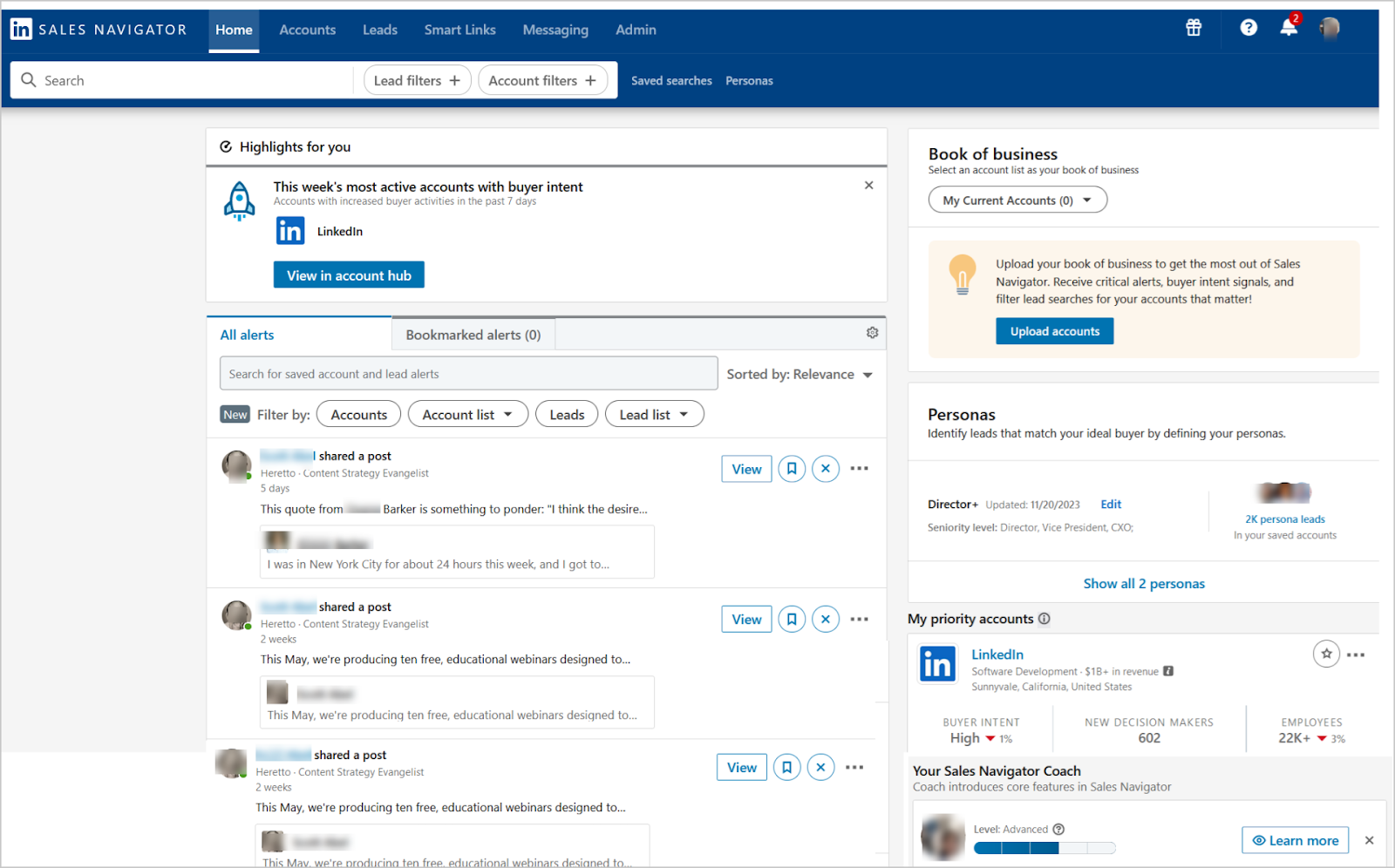
G2 score: 4.3/5 stars (2,044 reviews)
LinkedIn Sales Navigator is LinkedIn’s AI-powered sales tool designed to help reps find quality prospects and engage them more effectively. With more than 50 search filters and generative AI writing tools that make it easy to personalize outreach leveraging insights from LinkedIn activity, company news, and industry challenges, Sales Navigator helps reps build stronger relationships and close more deals on a platform their buyers already live on.
LinkedIn Sales Navigator features:
LinkedIn Sales Navigator pros:
LinkedIn Sales Navigator cons:

G2 score: 4.8/5 stars (174 reviews)
Clay is a data enrichment and automation platform that gives reps accurate and actionable data pulled from upwards of 130 different sources, with automatic data enrichment to ensure records stay up to date. Clay offers a library of pre-built workflow automations, signal tracking capabilities, and an AI-powered research tool called Claygent built to streamline prospecting workflows, improve sales intelligence, and help teams increase conversion rates.
Clay features:
Clay pros:
Clay cons:
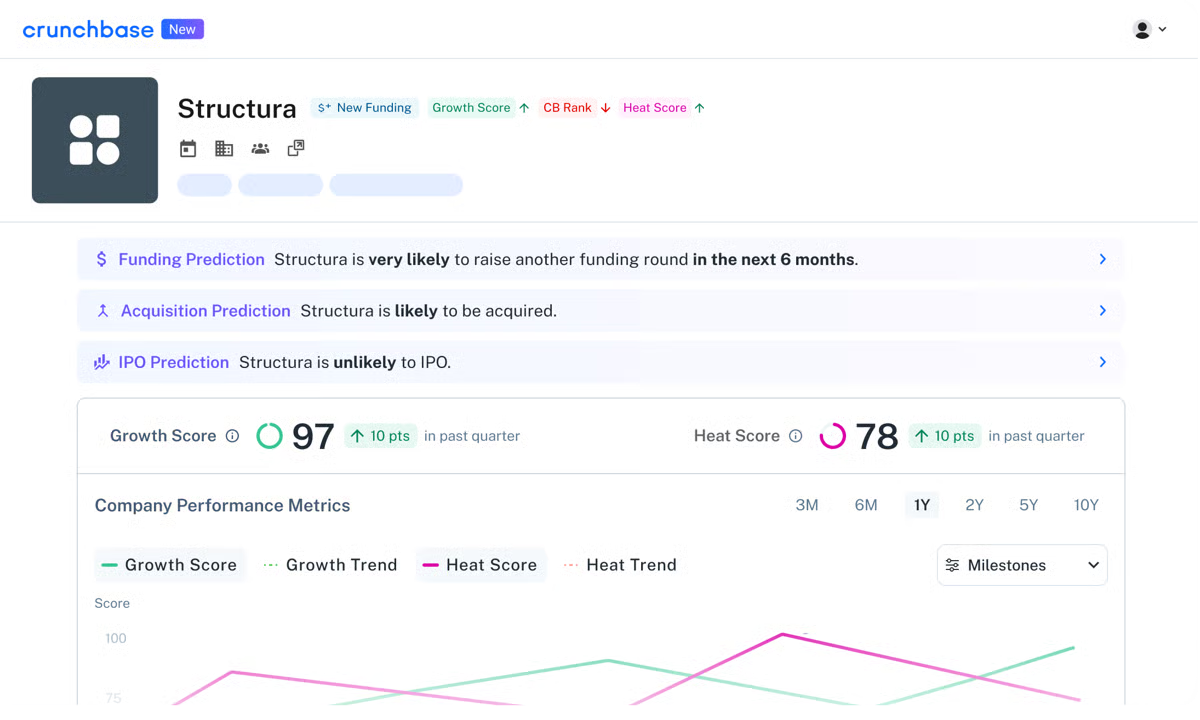
G2 score: 4.5/5 stars (385 reviews)
Crunchbase is a business information platform that provides data about specific companies, including funding rounds, investors, firmographics, and industry trends. Reps use this sales intelligence data to identify and qualify leads, keep tabs on business growth signals, and identify the best sales opportunities.
Crunchbase features:
Crunchbase pros:
Crunchbase cons:
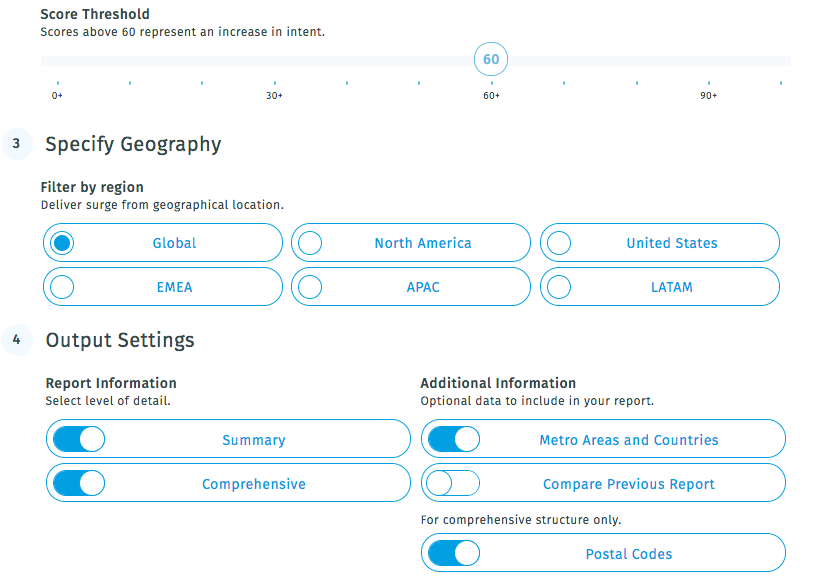
G2 score: 4.4/5 stars (155 reviews)
Bombora is a sales intelligence platform and intent data provider that uses AI to accurately identify website visitors and inform sales teams about which companies are most likely interested in what they’re selling. Using this data, teams can prioritize the highest quality leads and target them based on their buyer intent (e.g., visiting a pricing page or looking at a specific solutions page).
Bombora features:
Bombora pros:
Bombora cons:
Sales intelligence tools can obviously help sales teams sell more. But the insights they provide benefit all sorts of teams across the organization.
From sales and marketing to customer success, RevOps, go-to-market (GTM) teams, and even leadership, all departments that use customer and market data to figure out the best path forward can benefit from sales intelligence solutions.
Here’s how.
Sales teams can use sales intelligence tools to identify high-value leads and prioritize accounts based on firmographic, technographic, and behavioral data. They can leverage that data to personalize outreach with detailed insights into the unique pain points each customer faces, firing out emails and LinkedIn messages when buying signals and event-based triggers suggest it’s the best time to reach out.
For example, sales intelligence software might detect that a target account with 500 employees using a certain CRM recently posted a job for a new sales ops manager — data that suggests the company may be reevaluating its tech stack in the near future, the perfect time to reach out.
Sales intelligence tools can also automate follow-ups, ensuring no leads slip through the cracks.
Altogether, these capabilities help teams nurture leads more effectively, which ultimately makes it easier to win new business.
Sales intelligence software helps marketing teams segment their audiences more granularly, making it easy to engage prospects at scale with more precision. The technology also helps marketers measure the impact of their campaigns by tracking how each account engages with specific pieces of content and using those learnings to improve future campaigns.
Sales intelligence also helps marketing build better account-based marketing strategies, using relevant and timely insights to personalize messaging. With a single source of truth tying colleagues together, marketing and sales can also stay aligned, telling the same story and ensuring a consistent buying journey.
Customer success teams can use sales intelligence signals to identify cross-selling and upselling opportunities. For example, a customer who’s consistently hitting usage limits tied to their subscription might be happy to hear from a rep who reminds them about the headaches they’d lose by moving to a higher tier.
Leading sales intelligence tools can also help customer success teams reduce churn by notifying them about at-risk accounts ahead of time so they can intervene and fix any issues before they spiral out of control. On top of this, sales intelligence helps customer success see what the optimal customer onboarding experience looks like, using those insights to mimic that experience across all new accounts.
Altogether, sales intelligence gives customer success the data to ensure their customers are, well, successful.
By consolidating data from multiple systems — your CRM, marketing automation tools, and sales tech stack — sales intelligence technology gives RevOps teams a single source of truth, which they can use to confidently identify bottlenecks in the sales funnel and figure out a better way forward. After analyzing data, RevOps might find out that deals in a specific industry (e.g., finance) take longer to close and begin to study why that’s the case and what can be done to fix it.
Sales intelligence also helps RevOps increase forecasting accuracy by combining historical data analysis with predictive analytics. This gives RevOps a better idea of what future revenue looks like while ensuring all departments are using the same data to inform their strategies, which keeps everyone on the same page.
Sales intelligence platforms help GTM teams build data-driven strategies while ensuring sales, marketing, and customer success stay aligned.
Imagine GTM leaders realize that logistics companies using legacy ERP systems that have recently hired new IT leaders are highly interested in your company’s offerings; they’d probably decide to double-down on efforts targeting this cohort.
Sales intelligence tools give leaders more visibility into pipeline health, enabling them to track team performance metrics in real time and stay plugged into revenue trends.
With user-friendly at-a-glance dashboards, sales leaders can quickly spot coaching opportunities, allocate resources more strategically, and use real-time market data and competitive insights to refine strategies and steer their teams to more deals.
Add it all up, and sales intelligence platforms help cross-functional teams make smarter, more informed decisions. They’re the lifeblood of revenue engines.
Here at LeadIQ, our mission is equipping sales orgs with actionable insights and tools they can use to streamline prospecting and win more business.
We do this by providing highly accurate contact data, including firmographic, technographic, and demographic data, and making it super easy to capture contact data from the tools you’re already using.
Our platform also automatically tracks behavioral signals, like job changes, so reps can immediately engage champions and power users right when they switch companies or get promoted.
With automatic data enrichment — and an unrivaled contact database that includes EU and APAC data sources — LeadIQ gives reps the data they need to prospect with purpose all over the world.
We’re incredibly proud of what we’re building, and the market is, too. G2 recently gave us several Fall 2025 awards — including Highest User Adoption, Mid-Market; Most Implementable, Mid-Market; Regional Leader, EMEA; and Regional Leader, Enterprise, Americas.
And with a jam-packed roadmap of new AI-powered sales features coming down the pipeline, we’re just getting started.
Try our free Chrome extension today to see the power of LeadIQ with your own eyes.
Like what you see? Schedule a one-on-one demo to learn more about how LeadIQ can transform the way your team sells.
.png)

.png)
.png)